When to clean your gutters, by climate
Clean your gutters twice a year: once in spring, after the thaw, and once in late fall, after most leaves have dropped. If tall trees hang over your roof, plan on extra checks between those two cleanings.
In cold climates, the fall cleaning also gets the roof edge ready for snow. Clear gutters and downspouts give melting roof snow a path to drain, as Michigan's MIREADY winter guidance points out.
When to do it in your climate zone
| Climate zone | Like | When |
|---|---|---|
| Zone 1 (very hot) | Miami, Honolulu, Key West | March and December |
| Zone 2 (hot) | Houston, Phoenix, Orlando, Dallas | February and December |
| Zone 3 (warm) | Atlanta, Nashville, Las Vegas, Los Angeles | March and November |
| Zone 4 (mixed) | Washington DC, New York City, St. Louis, Seattle | April and November |
| Zone 5 (cool) | Chicago, Denver, Boston, Salt Lake City | April and November |
| Zone 6 (cold) | Minneapolis, Fargo, Burlington (Vermont), Helena | May and October |
| Zone 7 (very cold) | Duluth, Caribou (Maine), Anchorage | May and October |
| Zone 8 (subarctic) | Fairbanks and interior Alaska | June and September |
Months are typical for each zone and match the free HouseByMonth calendar. Not sure of your zone? Find your climate zone. Weather varies year to year, so move a task earlier if a cold snap or heat wave arrives early.
Why gutter cleaning matters
Gutters and downspouts exist to move rainwater down and away from your house. That keeps the soil around the foundation from getting saturated, which is how water ends up in basements and crawl spaces.
When gutters clog, water spills over the edge and lands right next to the foundation. It can also back up under the roof edge and rot the fascia boards.
Clean gutters won't prevent ice dams on their own. According to MIREADY, warm air from the living space leaking into the attic is usually the culprit: it melts roof snow, which refreezes at the cold eaves. If you get ice dams, look at attic insulation and air leaks, not just the gutters.
FEMA's guidance on sloped roofs treats gutters as part of the roof system. It recommends routine inspections to clean out vegetation and debris, tighten loose connections and trim tree limbs that extend over the roof.
Cold zones versus hot zones
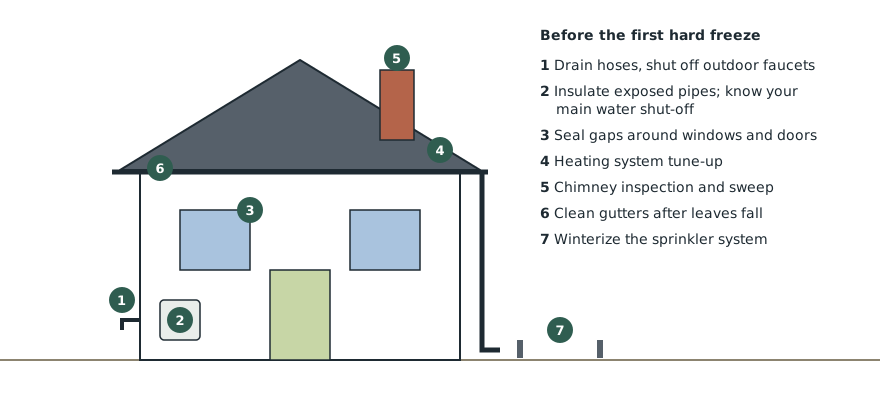
In cold zones, spring cleaning comes later because the ground and roof stay frozen longer. The fall cleaning moves earlier, so you finish before the first hard freeze and snow.
In hot and very hot zones, there is no real freeze to beat. The late-fall cleaning still clears out leaf drop, and the spring cleaning gets gutters ready for heavy rain and storm season.
Check the table above for the exact months in your zone. You can also build a full schedule for your home with the maintenance calendar.
Clogged already? What to look for
Watch your gutters during the next heavy rain. Any of these means they need attention before the scheduled cleaning:
- Water pouring over the gutter edge instead of out the downspout.
- Plants or seedlings growing in the gutter.
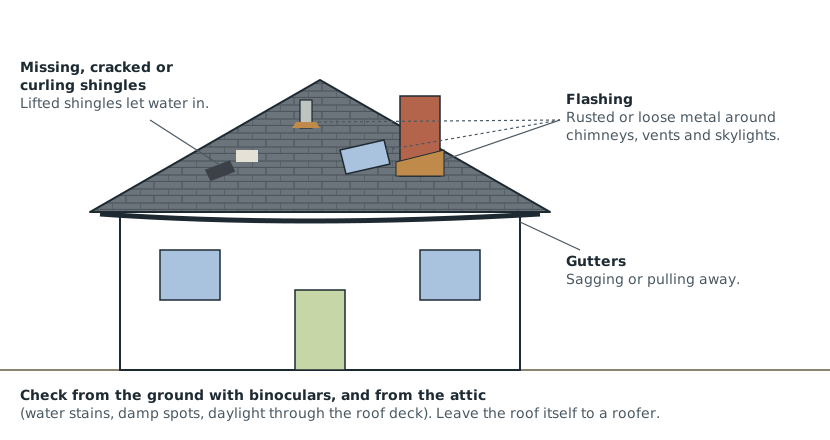
- Gutters sagging or pulling away from the fascia.
- Puddles or eroded soil along the foundation after storms.
- Water stains or peeling paint on the fascia or siding below the gutter.
How to clean your gutters, step by step
- Pick a dry day. Wet ladders and wet roofs are slippery.
- Inspect your ladder before you use it. Don't use it if any part is damaged.
- Set the ladder on firm, level ground, away from power lines. Have a helper hold the base.
- Scoop out leaves and debris by hand (wear gloves) and drop them into a bucket or onto a tarp.
- Move the ladder often. Don't lean out to reach farther along the gutter.
- Flush each gutter with a garden hose, working toward the downspout. Watch that water flows freely.
- If a downspout is clogged, flush it from the top or bottom to push the blockage out.
- Check that gutters slope toward the downspouts. The Building America Solution Center recommends a slope of at least 1/16 inch per foot of run.
- Tighten loose hangers and brackets, and note any leaking seams for repair.
- Check where each downspout empties. Water should land well away from the house, not next to the foundation.
Where downspout water should go
Federal and extension guidance gives slightly different numbers, but both point the same way: far from the house. The Building America Solution Center says downspouts should discharge at least 5 feet from the foundation, or into an underground system at least 10 feet away. The University of Georgia Extension suggests extending downspouts 6 to 10 feet.
The ground should also slope away from the house. UGA Extension suggests about 6 inches of drop over 6 to 10 feet.
Ladder safety
Most gutter cleaning happens on an extension ladder, so follow the basics from OSHA, NIOSH and the CPSC:
- Look for overhead power lines before you carry or raise the ladder. OSHA warns against using a metal ladder near them.
- Set an extension ladder at about a 75-degree angle. A simple guide is to place the base one quarter of the working length away from the wall.
- Extend the ladder at least 3 feet above the roof edge if you need to step onto the roof.
- Keep three points of contact (two hands and a foot, or two feet and a hand) while climbing.
- Don't stand on the top three rungs of an extension ladder.
- Keep people and pets out from under the ladder.
If you're not comfortable on a ladder, skip this job. Hiring it out is a safer choice than a fall.
Hiring it out
Call a pro if your house has two or more stories, a steep roof or gutters you can't reach safely from a ladder. Also call if power lines run near the roof edge.
A pro is also the right call for gutters that sag, leak at many seams or pull away from the house. Those problems often need re-hanging or replacement, not just cleaning.
Leaf guards in wildfire areas
In wildfire-prone areas, the Building America Solution Center recommends leaf guard screening. It keeps dry leaves and pine needles from piling up in gutters, where wind-borne embers can ignite them.
Pairs well with
Gutter cleaning pairs well with a look at your roof. While you're up there or looking from the ground, follow the checklist in how often to inspect your roof.
In cold zones, the fall gutter job is part of getting the house ready for winter. See how to winterize your house for the full list.
Sources
- FEMA: Fact Sheet 3.3.1, Roof Systems (Sloped Roofs)
- Pacific Northwest National Laboratory, Building America Solution Center: Gutters and downspouts
- University of Georgia Cooperative Extension: Mold and moisture checklist
- Michigan MIREADY: Preventing roof ice dams
- OSHA: Portable ladder safety QuickCard (copy hosted by NLTAPA)
- CDC NIOSH: Ladder safety, there's an app for that
- CPSC: Home safe checklist, outdoor repairs
Want every task on one schedule? Build your free maintenance calendar for your ZIP code and add it to your phone.