How often to change your HVAC air filter
Check your HVAC air filter once a month and replace it whenever it looks dirty. ENERGY STAR recommends a monthly check for central air conditioners, furnaces and heat pumps, and the EPA notes that manufacturers typically recommend replacement every 60 to 90 days.
How often you actually replace it depends on your filter, your home and how hard the system is running. The monthly check tells you when it's time.
When to do it in your climate zone
| Climate zone | Like | When |
|---|---|---|
| Zone 1 (very hot) | Miami, Honolulu, Key West | Every month |
| Zone 2 (hot) | Houston, Phoenix, Orlando, Dallas | Every month |
| Zone 3 (warm) | Atlanta, Nashville, Las Vegas, Los Angeles | Every month |
| Zone 4 (mixed) | Washington DC, New York City, St. Louis, Seattle | Every month |
| Zone 5 (cool) | Chicago, Denver, Boston, Salt Lake City | Every month |
| Zone 6 (cold) | Minneapolis, Fargo, Burlington (Vermont), Helena | Every month |
| Zone 7 (very cold) | Duluth, Caribou (Maine), Anchorage | Every month |
| Zone 8 (subarctic) | Fairbanks and interior Alaska | Every month |
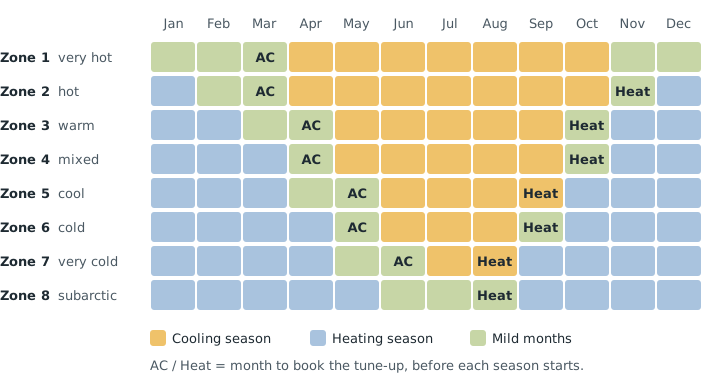
Months are typical for each zone and match the free HouseByMonth calendar. Not sure of your zone? Find your climate zone. Weather varies year to year, so move a task earlier if a cold snap or heat wave arrives early.
Why the filter matters
The filter catches dust and particles before they reach the blower and coils. When it clogs, the system has to push air through a blocked screen.
ENERGY STAR warns that a neglected filter can raise energy costs and damage the equipment, leading to early failure. The Department of Energy says replacing a dirty, clogged filter can lower an air conditioner's energy use by 5% to 15%.
A dirty filter can also let dust build up on the indoor coil. That reduces airflow and makes the coil less able to absorb heat.
Heavy-use seasons by climate
The filter only works while the system is running. In hot zones, the AC runs for much of the year, so filters load up faster in the long cooling season. In cold zones, the heating season does the same in winter.
Mixed climates have two busy seasons with quieter months in between. Filters may last longer in spring and fall, but keep checking monthly so a heavy-use stretch doesn't catch you off guard.
That's why the calendar puts this task in every month in every zone. Use the home maintenance calendar to see it alongside your other seasonal jobs.
What wears a filter out faster
The Department of Energy says filters may need more frequent attention if the system runs constantly, if your home is dusty, or if you have pets with fur. The Building America Solution Center adds homes with four or more occupants, indoor smoking or people with allergies.
Between scheduled checks, replace the filter right away if you see:
- A gray or brown surface you can't see light through.
- Visible clumps of dust, hair or lint.
- A filter that is bent, collapsed or crushed.
- A damp filter or signs of mold.
- Whistling or new noise from the return grille.
Choosing the right filter
Start with the size printed on the edge of your current filter. If you can't read it, measure the slot with a tape measure.
The EPA suggests a filter rated at least MERV 13, or as high as your system can handle. It says most systems can take a MERV 13 filter without problems, as long as the filter is changed often. If you're not sure, ask an HVAC technician.
Higher-MERV filters can restrict airflow if they're too dense for your system. The Building America Solution Center notes this can lower efficiency, strain the motor and, in humid climates, cause the indoor coil to freeze. Deeper pleated filters reduce that restriction.
How to change an HVAC filter, step by step
- Turn the system off at the thermostat.
- Find the filter. It's usually in a slot next to the furnace or air handler, or behind a return air grille on a wall or ceiling.
- Slide out the old filter and note the size and the airflow arrow.
- Look at the slot for dust or debris and wipe it out.
- Insert the new filter with the arrow pointing toward the HVAC equipment.
- Make sure it fits snugly. The EPA says air shouldn't leak around the edges, and you shouldn't have to bend or crush it to fit.
- Close the grille or cover and turn the system back on.
- Write the date on the filter edge so you know when you changed it.
Some systems use washable filters. Follow the manufacturer's instructions for cleaning, and let the filter dry fully before you reinstall it.
A few precautions
Turn the system off before you remove the filter, so the blower doesn't pull in loose dust. Don't open panels on the furnace or air handler beyond the filter access door.
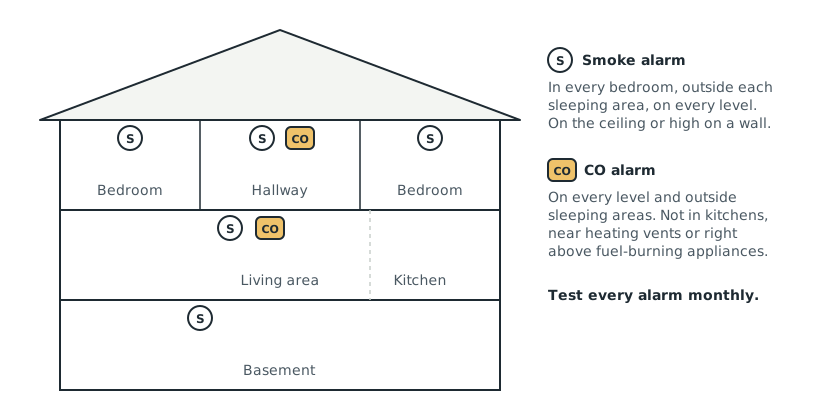
If you have a fuel-burning furnace, keep your carbon monoxide alarms working; see smoke and CO alarm maintenance.
When a technician should take a look
Call an HVAC technician if your filter gets dirty unusually fast or you find water around the unit. Also call if airflow stays weak after a filter change.
A technician can also tell you the highest MERV rating your system can handle. These checks fit naturally into a yearly visit; see the AC and furnace tune-up schedule for timing.
Keep going
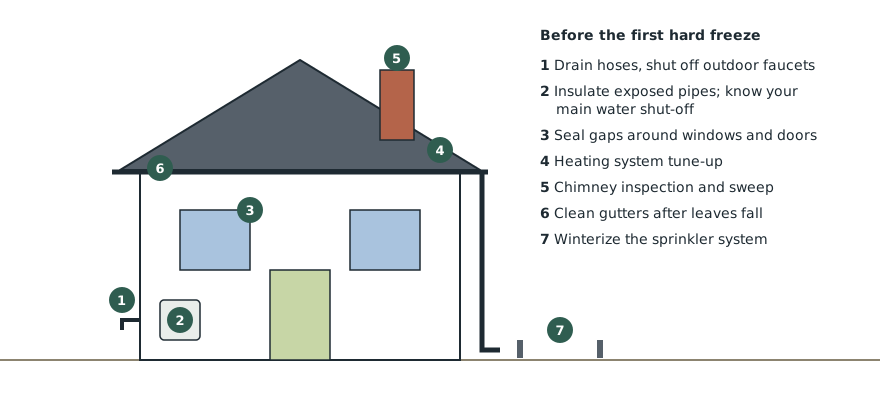
Filter checks are one part of keeping your heating and cooling system healthy. Before winter in colder zones, pair your filter change with the steps in how to winterize your house.
Sources
- ENERGY STAR: Maintenance checklist
- U.S. Department of Energy: Maintaining your air conditioner
- U.S. Department of Energy: Operating and maintaining your heat pump
- EPA: Guide to air cleaners in the home
- Pacific Northwest National Laboratory, Building America Solution Center: High-MERV filters
Want every task on one schedule? Build your free maintenance calendar for your ZIP code and add it to your phone.