How to clean a dryer vent and when to do it
Clean the lint filter before or after every load, and clean the dryer vent and duct periodically. Federal guidance doesn't set an exact interval, so the calendar uses a yearly vent check as its default. Do it sooner if drying slows down or the outside flap stops opening.
Lint is the main reason this matters. The U.S. Fire Administration (USFA) reports that failure to clean, at 31%, was the leading factor in home clothes dryer fires from 2018 to 2020.
When to do it in your climate zone
| Climate zone | Like | When |
|---|---|---|
| Zone 1 (very hot) | Miami, Honolulu, Key West | February |
| Zone 2 (hot) | Houston, Phoenix, Orlando, Dallas | February |
| Zone 3 (warm) | Atlanta, Nashville, Las Vegas, Los Angeles | February |
| Zone 4 (mixed) | Washington DC, New York City, St. Louis, Seattle | February |
| Zone 5 (cool) | Chicago, Denver, Boston, Salt Lake City | February |
| Zone 6 (cold) | Minneapolis, Fargo, Burlington (Vermont), Helena | February |
| Zone 7 (very cold) | Duluth, Caribou (Maine), Anchorage | February |
| Zone 8 (subarctic) | Fairbanks and interior Alaska | February |
Months are typical for each zone and match the free HouseByMonth calendar. Not sure of your zone? Find your climate zone. Weather varies year to year, so move a task earlier if a cold snap or heat wave arrives early.
Does climate matter?
Dryer venting works the same way in every climate, so the table uses the same month for every zone. Pick that month or any other fixed date, as long as it happens on a regular schedule.
In cold and snowy zones, also check the outside vent after storms. The USFA advises keeping dryer, furnace, stove and fireplace vents clear of snow and debris. You can see this task alongside your other monthly jobs in the home maintenance calendar.
How lint becomes a fire risk
Lint builds up in the dryer and in the exhaust duct, and the CPSC warns that this buildup can cause fires. It also slows airflow, so clothes take longer to dry.
The type of duct makes a difference. The CPSC says plastic or foil accordion ducts trap lint more easily and kink or crush more readily. It recommends replacing them with rigid or corrugated semi-rigid metal duct.
Clues that the vent is clogged
A blocked vent usually shows itself in a few ways:
- Clothes take longer than usual to dry.
- The outside vent flap does not open when the dryer is running.
- Little or no air comes out of the outside vent.
- You see lint around the outside vent opening or behind the dryer.
- The duct behind the dryer is crushed, kinked or torn.
- The duct is plastic or foil accordion material.
How to clean a dryer vent, step by step
Set aside about 45 minutes. You need a vacuum with a hose attachment, a screwdriver and a dryer vent brush kit sized for your duct.
- Unplug the dryer. For a gas dryer, also turn off the gas valve behind it (see the safety notes below).
- Remove the lint filter and clean it. Vacuum the filter slot as far as the hose reaches.
- Carefully slide the dryer away from the wall. Do not pull or twist the gas line or power cord.
- Loosen the clamp and detach the duct from the back of the dryer.
- Vacuum the dryer's exhaust outlet and the floor and wall behind the dryer. The USFA says lint builds up back there too.
- Run the brush through the duct from the inside end. Pull out loose lint and vacuum it up as you go.
- Go outside, remove or open the vent cover and clean the outside end of the duct.
- Check the duct for damage. Replace crushed, torn or accordion plastic or foil sections with rigid or semi-rigid metal duct.
- Reattach the duct and tighten the clamp. Push the dryer back without crushing the duct behind it.
- Plug the dryer back in, turn the gas back on if needed, and run it on an air or no-heat setting. If you smell gas after reconnecting, stop and follow the safety notes below.
- Go outside and confirm that the flap opens and air comes out strongly.
Getting the setup right
How the duct is installed affects how fast lint builds up. A Department of Energy installation guide says to keep the duct run as short and straight as possible. It notes that long runs or many bends create a fire hazard and increase drying time.
The outside end should have a backdraft damper (the flap) and no screen or cage. Screens catch lint and can block the opening. The same guide calls for a booster fan if the duct run must exceed 35 feet, which is a job for an installer.
Electrical and gas precautions
Always unplug the dryer before you move it or reach behind it. If an outlet, cord or plug looks damaged or scorched, stop and call an electrician.
Gas dryers need extra care. Turn off the gas valve before moving the dryer and avoid bending the flexible gas line. If you smell gas, do not touch switches or plugs; leave the house and call your gas utility or 911 from outside.
Never run the dryer without the lint filter in place. If the vent ends high on a wall or on the roof, do not clean it from a ladder or the roof yourself. Hire a professional instead.
When to hire it out
The USFA recommends having your dryer installed and serviced by a professional. Call one if the duct runs through a wall, attic or roof where you cannot reach it, or if it is very long or has many bends.
Also call a pro if drying is still slow after cleaning, if the duct needs rerouting, or if you have a gas dryer and any doubt about reconnecting it.
Related guides
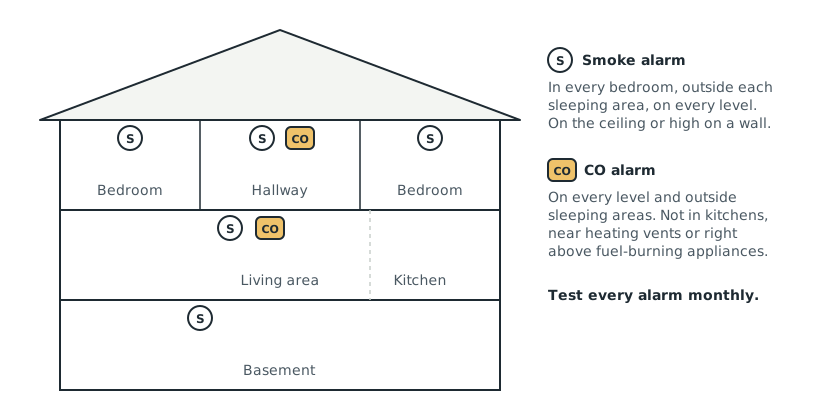
Lint fires and gas appliances both make working alarms essential. Follow the smoke and CO alarm maintenance schedule. In winter, check the dryer vent when you check your furnace vent; the winterizing checklist covers the rest.
Sources
- U.S. Fire Administration: Clothes dryer fire safety (PDF)
- U.S. Fire Administration: Appliance and electrical fire safety
- U.S. Consumer Product Safety Commission: Overheated clothes dryers can cause fires (PDF)
- U.S. Department of Energy: Vent a clothes dryer (job aid, PDF)
- Mass.gov: What to do if you smell gas
- U.S. Fire Administration: Carbon monoxide poisoning prevention
Want every task on one schedule? Build your free maintenance calendar for your ZIP code and add it to your phone.